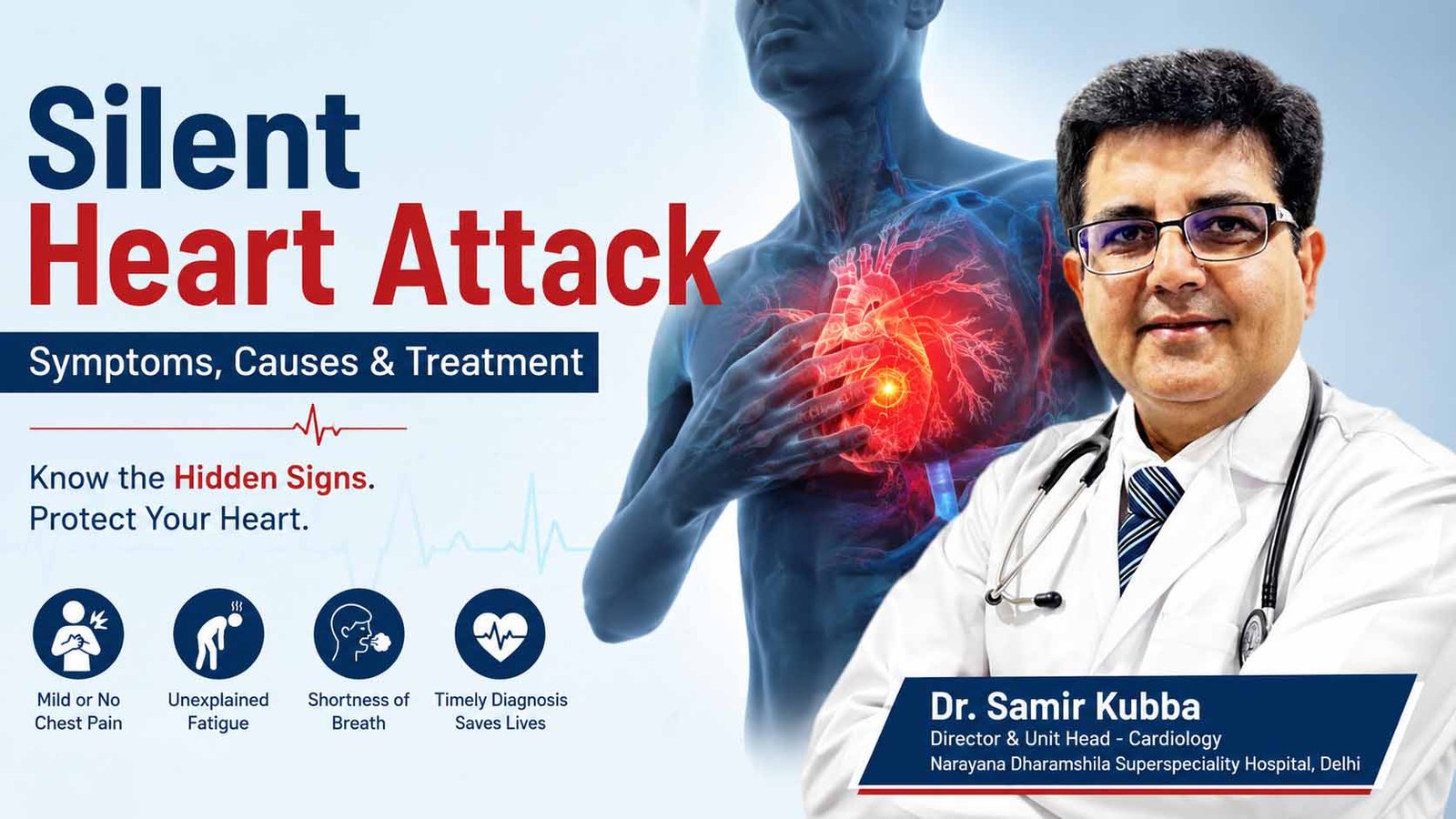
Silent Heart Attack: Symptoms, Causes & Treatment
A heart attack is often imagined as sudden, severe chest pain that requires immediate medical attention. However, not every heart attack causes dramatic symptoms. Some occur quietly with mild or unusual warning signs that many people ignore. These are known as silent heart attacks.
A silent heart attack can damage the heart muscle just like a typical heart attack, but because symptoms are subtle or absent, treatment is often delayed. This delay increases the risk of heart failure, irregular heartbeat, and future heart attacks.
In this comprehensive guide, Dr. Samir Kubba, one of the leading interventional cardiologists in Delhi, explains the symptoms, causes, risk factors, diagnosis, treatment, and prevention of silent heart attacks.
What is a Silent Heart Attack?
A silent heart attack, medically called a Silent Myocardial Infarction (SMI), occurs when blood flow to a part of the heart is blocked, causing damage to the heart muscle. Unlike a classic heart attack, the symptoms are mild, unusual, or even completely unnoticed.
Many people mistake these symptoms for:
- Indigestion
- Acidity
- Muscle pain
- Fatigue
- Stress
- Viral illness
Unfortunately, the heart muscle continues to suffer damage even when symptoms are ignored.
How Common Are Silent Heart Attacks?
Studies suggest that nearly 1 in every 2 heart attacks may be silent. Many patients only discover they have experienced one during:
- ECG
- Echocardiography
- Routine health check-ups
- Evaluation for another heart problem
This is why regular heart screening is important, especially for individuals with risk factors.
Silent Heart Attack Symptoms
Unlike classic heart attacks, silent heart attacks usually develop gradually.
Common symptoms include:
Mild Chest Discomfort
Instead of severe chest pain, you may experience:
- Pressure
- Tightness
- Fullness
- Mild burning sensation
Many patients dismiss it as acidity.
Unusual Fatigue
Extreme tiredness without any obvious reason can be an early warning sign.
You may feel:
- Weak throughout the day
- Unable to perform routine activities
- Fatigued even after adequate rest
Shortness of Breath
Breathlessness while:
- Walking
- Climbing stairs
- Performing household work
may indicate reduced blood supply to the heart.
Pain in Other Parts of the Body
Pain may occur in:
- Left arm
- Right arm
- Neck
- Jaw
- Back
- Shoulder
- Upper abdomen
Many people never experience chest pain at all.
Cold Sweating
Unexpected sweating without exercise or heat exposure should never be ignored.
Nausea or Indigestion
Symptoms may include:
- Stomach discomfort
- Acidity
- Vomiting
- Feeling bloated
These symptoms often resemble digestive problems.
Dizziness
Reduced blood flow to the heart may lead to:
- Lightheadedness
- Feeling faint
- Sudden weakness
Causes of Silent Heart Attack
A silent heart attack occurs when a coronary artery becomes blocked, reducing oxygen-rich blood flow to the heart.
The blockage usually results from:
- Cholesterol plaque buildup
- Blood clot formation
- Narrow coronary arteries
- Coronary artery disease
- Spasm of coronary arteries (less common)
Without oxygen, heart muscle cells begin to die within minutes.
Risk Factors
Anyone can experience a silent heart attack, but the risk is higher in people with:
- Diabetes
- High blood pressure
- High cholesterol
- Smoking
- Obesity
- Family history of heart disease
- Physical inactivity
- Chronic stress
- Kidney disease
- Increasing age
People with diabetes are particularly vulnerable because nerve damage can reduce the perception of chest pain.
Who Is at Greater Risk?
You should be especially cautious if you are:
- Above 40 years of age
- Male
- A postmenopausal woman
- Diabetic
- A smoker
- Overweight
- Living with uncontrolled blood pressure
- Having elevated cholesterol levels
How is a Silent Heart Attack Diagnosed?
A cardiologist may recommend several investigations.
Electrocardiogram (ECG)
Shows electrical changes indicating previous or ongoing heart damage.
Echocardiography (2D Echo)
Evaluates heart muscle movement and pumping function.
Blood Tests
Cardiac enzymes such as Troponin help detect heart muscle injury.
TMT (Stress Test)
Assesses blood supply to the heart during exercise.
Coronary Angiography
Provides detailed images of blocked coronary arteries and helps plan treatment.
Treatment of Silent Heart Attack
Treatment depends on the severity of artery blockage and heart damage.
It may include:
Medications
Your cardiologist may prescribe:
- Blood thinners
- Antiplatelet medicines
- Statins
- Blood pressure medicines
- Beta blockers
- ACE inhibitors
Coronary Angioplasty
If significant blockage is found, angioplasty with stent placement may be recommended to restore blood flow.
Lifestyle Changes
Patients are advised to:
- Quit smoking
- Exercise regularly
- Follow a heart-healthy diet
- Maintain ideal body weight
- Control blood pressure
- Manage diabetes
- Reduce stress
- Sleep adequately
Can a Silent Heart Attack Be Prevented?
Yes. Most silent heart attacks can be prevented through timely risk assessment and healthy lifestyle choices.
Preventive measures include:
- Annual heart check-up after 40 years
- Blood pressure control
- Diabetes management
- Cholesterol monitoring
- Regular physical activity
- Healthy diet
- Avoid tobacco
- Limit alcohol consumption
- Stress management
- Adequate sleep
When Should You See a Cardiologist?
Consult a cardiologist immediately if you experience:
- Unexplained chest discomfort
- Breathlessness
- Sudden fatigue
- Jaw or arm pain
- Cold sweating
- Dizziness
- Recurrent indigestion with exertion
- Any unusual symptoms if you have diabetes or hypertension
Why Choose Dr. Samir Kubba?
Dr. Samir Kubba is among the leading interventional cardiologists in Delhi with extensive experience in diagnosing and treating complex heart conditions.
He offers:
- Comprehensive heart evaluations
- Preventive cardiology consultations
- Advanced cardiac diagnostics
- Coronary angiography
- Coronary angioplasty
- Heart failure management
- Hypertension and cholesterol management
- Personalized treatment plans
His patient-centric approach focuses on early diagnosis, evidence-based treatment, and long-term heart health.
Frequently Asked Questions (FAQs)
Can you have a heart attack without chest pain?
Yes. Many silent heart attacks occur without severe chest pain and present only with fatigue, breathlessness, nausea, or mild discomfort.
Is a silent heart attack dangerous?
Yes. It causes the same damage to the heart muscle as a typical heart attack and increases the risk of future cardiovascular complications if left untreated.
Can a silent heart attack be detected later?
Yes. Many silent heart attacks are discovered during ECG, echocardiography, stress testing, or coronary angiography performed for other reasons.
Are diabetic patients more likely to have silent heart attacks?
Yes. Diabetes can affect the nerves that transmit pain signals, making heart attack symptoms less noticeable.
What should I do if I suspect a silent heart attack?
Do not ignore the symptoms. Seek immediate medical evaluation, especially if you have risk factors such as diabetes, hypertension, high cholesterol, or a family history of heart disease.
Conclusion
A silent heart attack may not cause dramatic symptoms, but its consequences can be just as serious as a classic heart attack. Mild chest discomfort, unexplained fatigue, shortness of breath, nausea, or dizziness should never be ignored—particularly if you have diabetes, high blood pressure, or other cardiovascular risk factors.
Early diagnosis, timely treatment, and regular heart check-ups can prevent permanent heart damage and save lives. If you notice any warning signs or have concerns about your heart health, consult an experienced cardiologist without delay.

 Jan 2, 2024