The Role of Nutrition in Heart Health
Heart disease remains one of the leading causes of death worldwide, but the good news is that many cardiovascular conditions can be prevented through healthy lifestyle choices. Among these, nutrition plays a vital role in maintaining a healthy heart. The food you eat every day directly affects your blood pressure, cholesterol levels, blood sugar, body weight, and overall cardiovascular health.
A balanced and heart-friendly diet not only helps reduce the risk of heart attacks and strokes but also supports long-term heart function and improves quality of life.
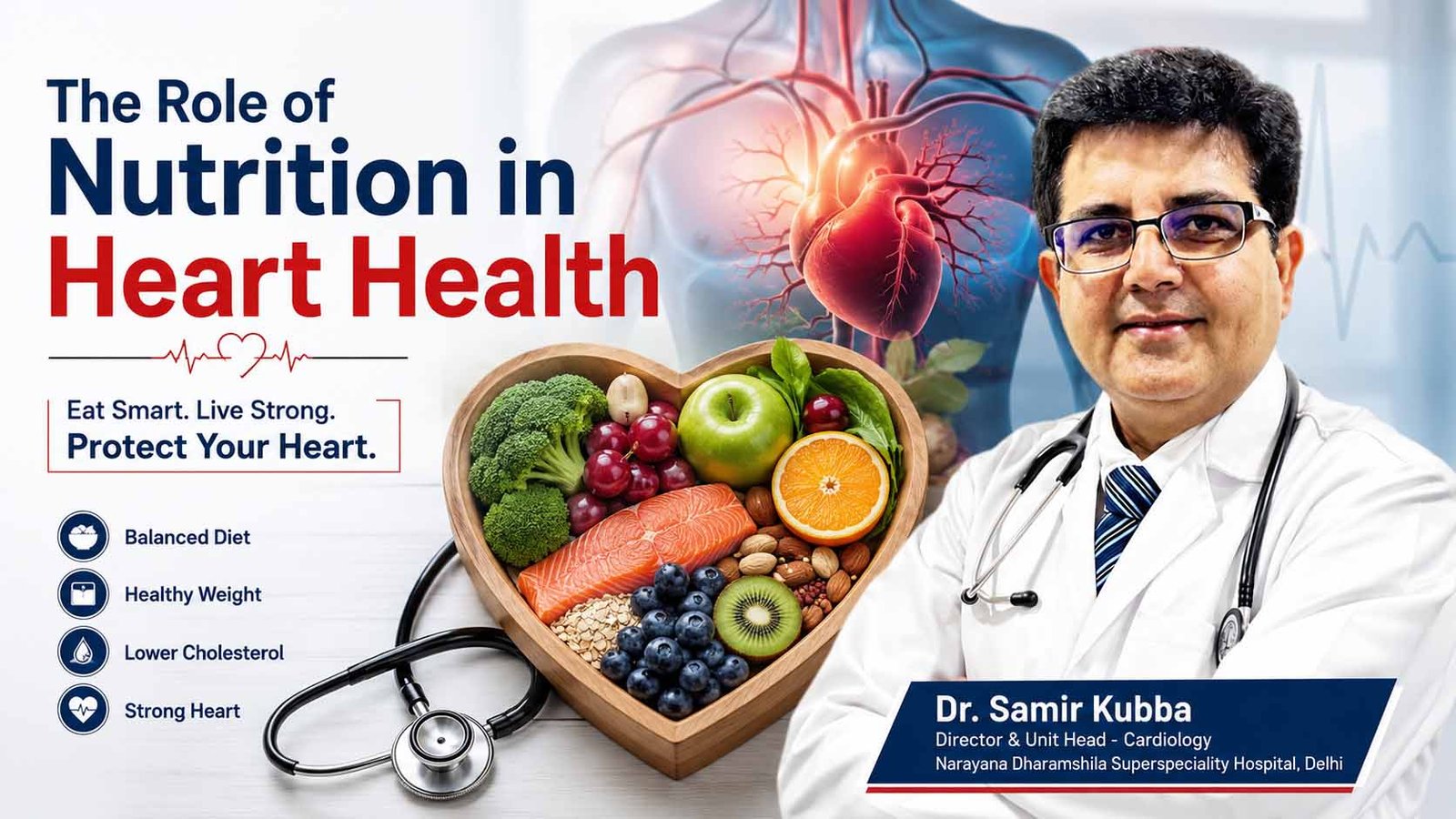
In this comprehensive guide, Dr. Samir Kubba, Director & Unit Head of Cardiology at Narayana Dharamshila Superspeciality Hospital, Delhi, explains how proper nutrition protects your heart, which foods to include, what to avoid, and practical dietary tips for lifelong cardiovascular health.
Why Nutrition Matters for Heart Health
Every meal you consume has an impact on your cardiovascular system. A diet rich in unhealthy fats, excess salt, sugar, and processed foods can lead to:
- High cholesterol
- High blood pressure
- Diabetes
- Obesity
- Inflammation
- Blocked arteries
On the other hand, a nutritious diet helps:
- Lower LDL (bad) cholesterol
- Increase HDL (good) cholesterol
- Control blood pressure
- Maintain healthy body weight
- Improve blood sugar levels
- Reduce inflammation
- Prevent plaque buildup in arteries
Good nutrition is one of the most effective ways to reduce your risk of heart disease.
How Food Affects Your Heart
Your heart depends on healthy blood vessels to supply oxygen-rich blood throughout the body. Poor dietary habits can damage these vessels over time.
Excessive intake of saturated fats, trans fats, sugar, and sodium contributes to the development of atherosclerosis, a condition where fatty deposits narrow the arteries. This increases the risk of heart attack and stroke.
Conversely, foods rich in fiber, healthy fats, antioxidants, vitamins, and minerals help keep blood vessels healthy and improve heart function.
Best Foods for a Healthy Heart
Fresh Fruits
Fruits are rich in vitamins, antioxidants, and fiber that help lower cholesterol and blood pressure.
Excellent choices include:
- Apples
- Oranges
- Berries
- Pomegranate
- Papaya
- Guava
Green Leafy Vegetables
Vegetables are packed with nutrients that protect the heart.
Include:
- Spinach
- Broccoli
- Kale
- Fenugreek leaves
- Bottle gourd
- Carrots
Aim for at least five servings of fruits and vegetables every day.
Whole Grains
Whole grains improve digestion and help regulate cholesterol levels.
Healthy options include:
- Oats
- Brown rice
- Whole wheat
- Quinoa
- Millets
Healthy Proteins
Choose lean protein sources such as:
- Fish
- Skinless chicken
- Lentils
- Beans
- Soy products
- Low-fat dairy
Fatty fish like salmon and mackerel are excellent sources of Omega-3 fatty acids.
Healthy Fats
Not all fats are harmful.
Heart-healthy fats include:
- Olive oil
- Mustard oil (in moderation)
- Nuts
- Almonds
- Walnuts
- Flaxseeds
- Chia seeds
- Avocados
Fiber-Rich Foods
Dietary fiber helps reduce cholesterol absorption.
Good sources include:
- Oats
- Beans
- Fruits
- Vegetables
- Whole grains
- Psyllium husk
Foods That Can Harm Your Heart
To reduce cardiovascular risk, limit:
Processed Foods
Examples include:
- Chips
- Instant noodles
- Packaged snacks
- Frozen meals
These foods are often high in sodium and unhealthy fats.
Sugary Foods
Reduce intake of:
- Soft drinks
- Sweets
- Cakes
- Pastries
- Ice cream
Excess sugar increases the risk of obesity and diabetes.
Excess Salt
Too much sodium raises blood pressure.
Adults should aim for less than 5 grams (about one teaspoon) of salt per day.
Saturated and Trans Fats
Limit:
- Butter
- Ghee (in excess)
- Cream
- Fried foods
- Fast food
- Bakery products
These foods increase LDL cholesterol and contribute to artery blockage.
Essential Nutrients for Heart Health
Omega-3 Fatty Acids
Benefits include:
- Lower triglycerides
- Reduced inflammation
- Better heart rhythm
- Lower risk of heart attack
Potassium
Helps regulate blood pressure.
Rich sources:
- Bananas
- Coconut water
- Spinach
- Sweet potatoes
Magnesium
Supports healthy heart rhythm.
Found in:
- Nuts
- Seeds
- Whole grains
- Green vegetables
Fiber
Helps:
- Reduce cholesterol
- Improve digestion
- Maintain healthy blood sugar
Antioxidants
Protect blood vessels from oxidative damage.
Sources include:
- Berries
- Citrus fruits
- Tomatoes
- Green tea
Nutrition Tips for Heart Patients
If you already have heart disease:
- Eat smaller, balanced meals.
- Avoid overeating.
- Read food labels carefully.
- Reduce salt and sugar intake.
- Drink enough water.
- Choose grilled or steamed foods instead of fried foods.
- Include fresh fruits and vegetables daily.
- Avoid smoking and excessive alcohol.
- Follow your cardiologist's dietary recommendations.
Diet and Cholesterol Management
A heart-friendly diet can significantly improve cholesterol levels.
To lower bad cholesterol:
- Eat soluble fiber.
- Replace butter with healthier oils.
- Increase intake of nuts and seeds.
- Avoid processed meats.
- Limit fried foods.
Combined with regular exercise, dietary improvements can greatly reduce cardiovascular risk.
Heart-Healthy Lifestyle Beyond Nutrition
Nutrition works best when combined with healthy lifestyle habits.
- Exercise for at least 150 minutes each week.
- Maintain a healthy body weight.
- Quit smoking.
- Limit alcohol consumption.
- Manage stress through yoga or meditation.
- Sleep 7–8 hours every night.
- Get regular heart check-ups.
When Should You Consult a Cardiologist?
You should seek medical advice if you have:
- High blood pressure
- Diabetes
- High cholesterol
- Blood pressure medicines
- Obesity
- Family history of heart disease
- Chest pain
- Shortness of breath
- Irregular heartbeat
Early evaluation can prevent serious cardiovascular complications.
Why Choose Dr. Samir Kubba?
Dr. Samir Kubba is one of Delhi's leading interventional cardiologists with extensive experience in preventive cardiology and comprehensive heart care.
His expertise includes:
- Preventive heart screening
- Coronary angiography
- Coronary angioplasty
- Hypertension management
- Cholesterol management
- Heart attack prevention
- Personalized cardiac risk assessment
- Lifestyle and dietary counseling
Dr. Kubba believes that prevention is the cornerstone of heart health, helping patients reduce their risk through evidence-based treatment and healthy lifestyle modifications.
Frequently Asked Questions (FAQs)
Can diet alone prevent heart disease?
A healthy diet significantly lowers the risk of heart disease, especially when combined with regular exercise, weight management, and avoidance of smoking.
Which fruits are best for heart health?
Apples, berries, oranges, pomegranates, guava, and papaya are excellent choices due to their fiber and antioxidant content.
Is salt harmful for heart patients?
Excess salt increases blood pressure, which places additional strain on the heart. Limiting sodium intake is recommended.
Are eggs good for heart health?
Most healthy individuals can consume eggs in moderation as part of a balanced diet. Patients with specific medical conditions should consult their doctor.
How often should heart patients consult a cardiologist?
Individuals with heart disease or significant risk factors should undergo regular follow-up visits as advised by their cardiologist.
Conclusion
Nutrition is one of the most powerful tools for protecting your heart and preventing cardiovascular disease. A balanced diet rich in fruits, vegetables, whole grains, healthy fats, and lean proteins can help lower cholesterol, control blood pressure, manage diabetes, and maintain a healthy weight.
Combined with regular exercise, stress management, and routine cardiac check-ups, good nutrition forms the foundation of lifelong heart health.

 Jan 2, 2024